How to Stop Obsessing Over Someone: A 3-Step Framework
Obsession over someone is rarely about them. Learn a practical three-step framework to recognize the phantom, release the emotions underneath, and reclaim the qualities you have been seeking externally.

Last summer, my friend Maya 😅 called me at 2 AM to analyze a three-word text from her crush. She had spent six hours crafting the perfect reply, only to realize he had accidentally sent her a meme meant for his group chat. We laughed about it later, but that spiral of obsession was very real and very very exhausting.
If you have ever found yourself daydreaming about someone for hours, replaying conversations, or scheming about how to make them notice you, you already know how obsession feels. It can also flip into hatred, where you spend equal energy plotting someone's downfall. Learning how to stop obsessing over someone starts with one uncomfortable truth: the person you are obsessed with is usually not the real person at all.
The Phantom You Are Chasing
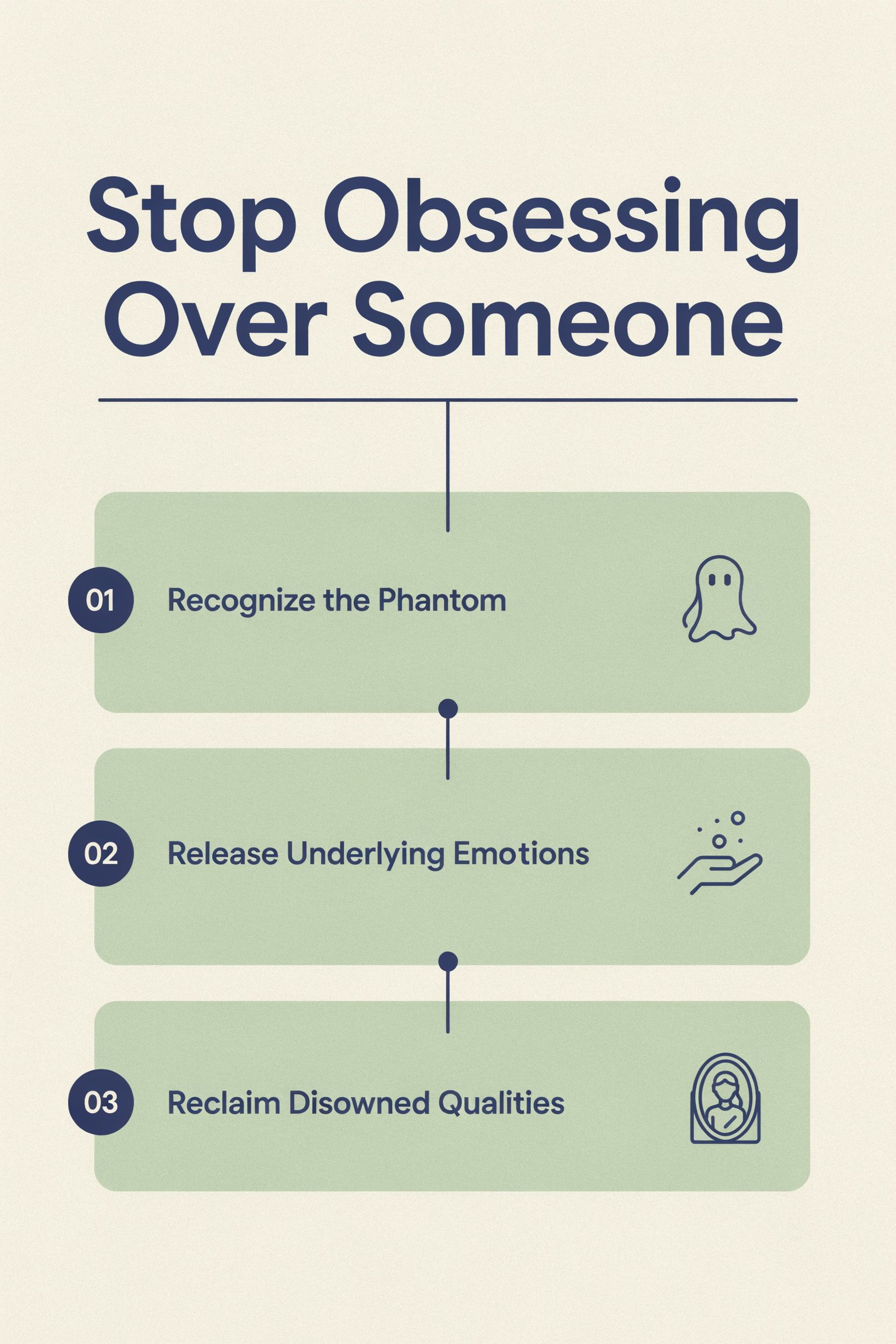
Here is the 🎭 first reality check. The person living in your head is a caricature. They speak and behave exactly as you imagine or desire them to, which is almost always exaggerated or completely different from how they act in real life.
You can verify this fairly easily. The next time you interact with this person on a safe, casual occasion, notice how quickly disappointment 😤 sets in when they do not match your mental script. That gap between expectation and reality is proof that your obsession is feeding on a fantasy, not a human being.
This matters because fantasies are impossible to satisfy. You can never win over a phantom, and you can never defeat one either. The longer you chase the imagined version, the more energy ⚡ you drain from your actual life and relationships that could genuinely nourish you.

The Emotions Fueling the Fire
Obsession is 🔥 never really about the other person. It is about three core emotions that use the person as a convenient outlet, and understanding which one is driving you changes everything.
- Unhealthy neediness shows up as a desperate wanting that goes beyond normal attraction. You are not seeking connection, you are seeking rescue. The obsession feels like hunger 🍽️ that never fills because it is not food you actually need.
- Deep hatred goes beyond mild annoyance. When someone triggers rage that feels disproportionate, they are usually standing in for an older wound. The intensity belongs to a past experience, not the present moment. You are essentially arguing with a ghost wearing someone else's face.
- Grave fear can disguise itself as excitement or anger. Fear of being alone, fear of being unseen, fear of losing control. Obsession gives your fear 😨 a target so you do not have to face it directly, which feels safer in the short term but keeps you stuck.
The key insight is that these emotions often accumulate from experiences that have nothing to do with the person you are obsessed with. They are simply the current manifestation, the latest container. When you release the intensity of the underlying emotions, perhaps through release meditations 🧘 or by fully feeling them without suppressing, the obsession loses its fuel and becomes much quieter. You may still think about the person, but the charge is gone.
The Missing Pieces You Seek
This point applies to desire-based obsession, not hate-based 🧩 ones. Sometimes you are obsessed with someone because they represent qualities you think you lack or have disowned in yourself.
Being around them makes you feel whole, as if their confidence, charm, or calmness might rub off on you. The obsession is not really about them. It is about a reunion 🤝 with parts of yourself you pushed away, perhaps because someone once told you those qualities were unwelcome.
Use the obsession as information. Ask yourself what specific qualities this person embodies that you admire or envy. Write them down if it helps. Then turn inward and ask how you can cultivate those qualities in your own life, in your own way. Once you begin to reclaim them, the obsession often dissipates or disappears completely ✨, because you no longer need an external source to feel complete.

A Grounded Way Forward
Obsession sabotages relationships rather than 💡 building them. It creates pressure, anxiety, and behavior that is not your normal sensible self. At mild levels it causes awkwardness and overthinking. At extreme levels it can lead to actions that cause real harm to yourself and others.
The path through it is not to fight the obsession directly, but to understand what it is trying to tell you. The phantom reveals your imagination. The emotions reveal your wounds. The admired qualities reveal your disowned potential.
When you stop outsourcing your inner work to another person, you get to come 🏠 home to yourself. And that is a relationship worth nurturing, one that actually has the power to change how you show up for everyone else.
Footnotes
Content note
- If your obsession is leading to thoughts of harming yourself or others, please reach out to a licensed mental health professional or a crisis hotline immediately.
- This article offers self-reflection tools, not professional therapy. If obsession is interfering with your daily functioning, consider speaking with a counselor.
References worth exploring
- Harville Hendrix, Getting the Love You Want (2008)
- Thich Nhat Hanh, Reconciliation: Healing the Inner Child (2010)
Questions readers ask
- Why do I obsess over someone I barely know?
- Obsession is rarely about the real person. You are usually chasing a phantom—an idealized version of them that exists only in your imagination. The obsession is fueled by underlying emotions such as neediness, fear, or a sense that they embody qualities you have disowned in yourself.
- How do I stop thinking about someone all the time?
- Start by recognizing that the person in your head is a fantasy, not reality. Then identify the emotions driving the obsession—neediness, hatred, or fear—and allow yourself to fully feel them without suppressing. Finally, ask what qualities you admire in this person and find ways to cultivate those qualities in your own life.
Join the conversation
What did this bring up for you? Share a moderated reflection with the Entourage Life community.