How to Stay Disciplined When Emotions Are Wrecking Your Routine
Emotional turmoil can derail your best routines. Learn five practical strategies to stay disciplined when life feels heavy, without burning out or giving up.

You're sitting on the edge of your bed 🛏️, alarm buzzing, knowing you promised yourself you'd go for that morning run. But your chest feels heavy and your mind is somewhere else entirely. Something happened this week, maybe something you can't even fully name, and now the routine that felt automatic a few days ago feels like climbing a mountain 🏔️ in flip-flops.
This is the real test of discipline. Not the good days, those are easy. The hard days, the ones where emotional weight sits on your shoulders like a wet blanket, are where habits either bend or break.
Here's the good news: staying disciplined during emotional turmoil doesn't require perfection. It requires a different playbook for the storm.
The Problem: Discipline Meets Emotional Overload
When you're emotionally overwhelmed, your nervous system is already working overtime. Your brain 🧠 is spending energy processing feelings, replaying conversations, or bracing against anxiety. Discipline, which normally runs on autopilot, suddenly requires conscious effort that you simply don't have in reserve.
So you face a false choice: push through at full intensity and risk burning out, or abandon the routine entirely and lose momentum.
Neither option serves you. What you need is a middle path.
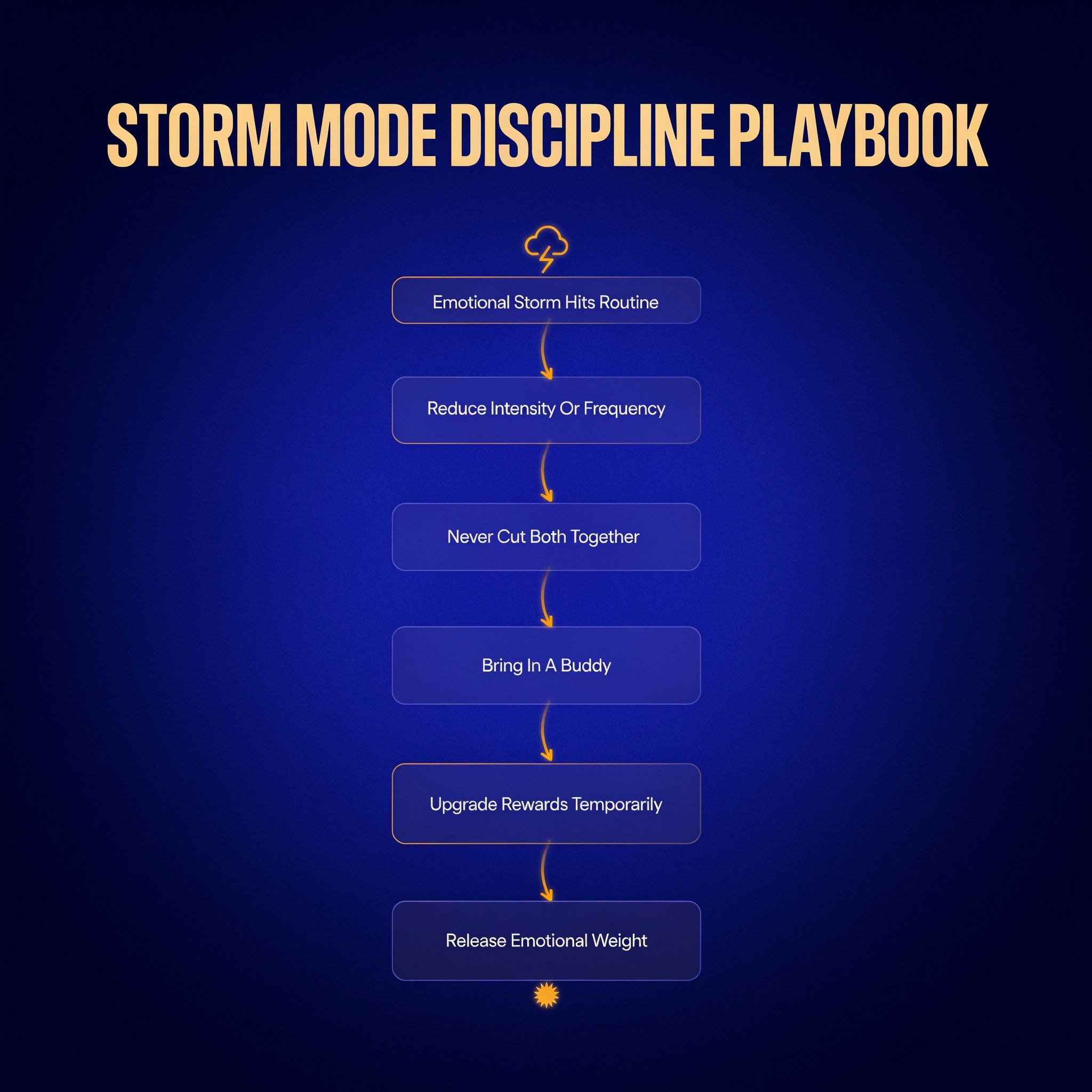
The Storm Mode Framework
Think of your normal discipline routine as driving on a clear highway 🛣️. Emotional turmoil is like hitting a sudden storm. You don't abandon the car, but you also don't keep your foot flat on the gas. You adjust your speed, grip the wheel a little tighter, and keep moving forward.
Here are five practical adjustments to help you show up when everything inside you wants to shut down.
1. Dial Down Intensity, Keep Frequency
Your first option is to reduce the intensity of each session while showing up at the same times. Work for two hours instead of four. Run 60% of your usual distance 🏃. Write 300 words instead of 1,000.
The goal here is simple: maintain the exact same frequency. Your brain still registers the habit loop. You still prove to yourself that you show up. The identity of someone who keeps promises stays intact, even if the output is smaller.
2. Dial Down Frequency, Keep Intensity

Your second option is the opposite approach. Keep your sessions at full intensity, but reduce how often you do them. If you normally practice a skill seven days a week, drop to four. If you train five days, try three.
One important rule: try not to skip more than one day between repetitions. Longer gaps make it harder to restart.
You must choose either option 1 or option 2. Never both. Cutting intensity and frequency at the same time signals to your brain 🧠 that the habit is optional, which is exactly the message you want to avoid.
3. Bring in a Buddy
Emotional turmoil often makes us want to isolate, but isolation is the enemy of discipline during hard times 🤝. Find someone to show up alongside you.
If you've been going to the gym alone, ask someone to join you. Make a new gym friend if you need to. If you're trying to break a bad habit, find an accountability partner who checks in daily. The simple presence of another person changes the math. Skipping feels different when someone is expecting you.
4. Temporarily Upgrade Your Rewards
During emotional storms, your baseline motivation is already depleted. This is the time to give yourself a little extra fuel ⛽.
Add a small reward for showing up. A piece of chocolate after your workout. A favorite coffee after your work session. A hot bath after your evening journaling. Keep it small and intentional. This is a temporary boost, not a permanent change to your reward system.
5. Release the Emotional Weight

This is the most important step, and it's the one most people skip. Discipline strategies help you function, but they don't process the emotions underneath.
Find safe ways to release what you're carrying. Talk to a trusted friend. Try an emotional release meditation 🧘. Find a quiet corner and let yourself scream. Take a martial arts class and hit the bag as hard as you can. Go for a long walk and let the tears come if they need to.
Any safe activity that helps you unload is fair game. The goal isn't to fix everything at once. The goal is to create regular outlets so emotional pressure doesn't build to the point where it collapses your routine entirely.
Consistency Over Perfection
Here's the truth nobody tells you about discipline: the people who maintain habits long-term aren't the ones who never waver. They're the ones who learn to bend without breaking 🌿.
Emotional turmoil will come and go. Some seasons you'll hit personal bests. Other seasons, showing up at 60% will be the victory. Both count.
When the storm hits, don't abandon the car. Adjust your speed, keep your hands on the wheel, and keep moving forward. The road will clear again, and when it does, you'll still be on it.
Content note
- If emotional turmoil feels overwhelming, persistent, or interferes with daily functioning, consider reaching out to a licensed mental health professional for support.
References worth exploring
- James Clear, Atomic Habits (2018)
- B.J. Fogg, Tiny Habits (2019)
Questions readers ask
- Should I push through my full routine when I'm emotionally overwhelmed?
- No. Pushing through at full intensity risks burning out, while abandoning the routine entirely loses momentum. The recommended approach is a middle path: adjust your speed and keep moving forward at a reduced level rather than forcing full output or quitting altogether.
- Is it better to reduce intensity or reduce frequency of my habits during hard times?
- Choose one or the other, not both. You can dial down intensity while keeping the same schedule (for example, running 60% of your usual distance), or keep full intensity but reduce how often you practice. Cutting both at the same time signals to your brain that the habit is optional, which makes it harder to maintain.
Join the conversation
What did this bring up for you? Share a moderated reflection with the Entourage Life community.